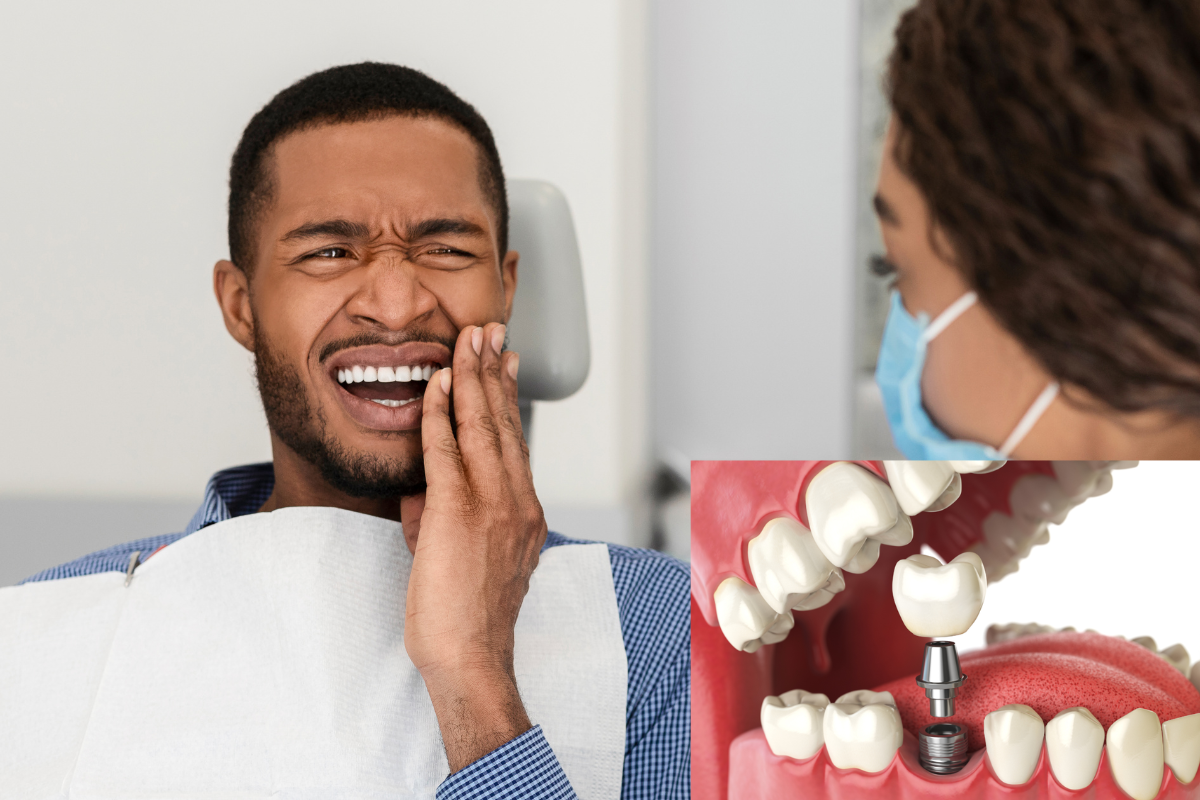
Losing teeth in different areas of your mouth can affect chewing, speech, and confidence. It can also cause nearby teeth to shift toward the open spaces. Fortunately, each gap can often be restored without altering the healthy teeth between them.
At Market Street Dental Studio, patients receive a thorough evaluation to determine how tooth location, jawbone health, and bite forces may affect treatment. Dr. Wheeler considers each missing tooth separately before recommending a restoration plan. If you are exploring dental implants in Buckeye, our practice can help you understand how many implant posts may be required and whether preliminary care is necessary.
Can Separate Gaps Be Replaced With Implant-Supported Teeth?
Yes, dental implants can replace non-adjacent missing teeth, but separate gaps usually require separate implant posts. An implant cannot support two replacement teeth when healthy natural teeth stand between the empty spaces.
For example, imagine that you are missing one premolar on the upper right and one molar on the lower left. Each space generally needs its own implant because the gaps are located in different parts of the mouth. The natural teeth between them should remain untouched.
This approach creates independent replacements that can restore chewing function in each affected area.
How Many Implants Are Required for Non-Adjacent Missing Teeth?
In many cases, one implant is used for each isolated missing tooth. Therefore, two separate gaps may require two posts, while three isolated gaps may require three. However, the final number depends on more than the number of absent teeth.
Our dentist in Buckeye will evaluate:
- The position of every missing tooth
- The amount and density of available jawbone
- Gum health around each treatment site
- The condition of neighboring teeth
- Bite pressure and teeth-grinding habits
- The space available for each implant crown
- The location of nerves and sinus cavities
If several teeth are missing next to one another, two posts may support an implant bridge. That method usually does not apply when natural teeth fill the gaps.
Why Can One Implant Not Connect Two Separate Gaps?
An implant-supported bridge needs its supporting posts to be positioned within the same continuous toothless area. Connecting replacements across healthy natural teeth would create an impractical restoration and interfere with normal tooth movement.
Natural teeth and implant posts also respond differently to chewing pressure. Natural teeth have periodontal ligaments that allow microscopic movement. An integrated implant remains much more rigid within the jaw. Combining these structures incorrectly may place uneven forces on the restoration.
Keeping each isolated replacement independent provides several advantages:
- Healthy neighboring teeth do not need to be reshaped.
- Each crown can be cleaned separately.
- Chewing pressure can be distributed more predictably.
- A problem in one area does not automatically affect another restoration.
- Each tooth can be designed to match its surrounding teeth.
What Determines Whether You Qualify for Treatment?
Not every open space can receive an implant immediately. Adequate bone volume and controlled gum health are important for stable placement. Smoking, uncontrolled diabetes, severe teeth grinding, and certain medications may also influence healing.
Detailed imaging helps assess bone height, bone width, root positions, nerves, and sinus anatomy. If bone has shrunk after tooth loss, bone grafting may be recommended before or during placement. Gum disease must also be addressed because active inflammation can threaten long-term implant stability.
Patients considering dental implants in Buckeye can visit our dental office for an examination and personalized imaging. This assessment helps clarify which gaps can be treated, whether grafting is needed, and how the stages may be scheduled.
What Does the Replacement Process Involve?
Treatment commonly includes the following stages:
- Consultation and imaging: The dentist reviews your health history, examines each gap, and studies diagnostic images.
- Preparatory treatment, gum therapy, extraction-site care, or bone grafting may be performed as needed.
- Implant placement: A biocompatible post is positioned in the jawbone at each planned site.
- Healing: Bone gradually integrates with the post. Healing time varies according to the site and individual health.
- Abutment and crown placement: A connector and custom implant crown complete each replacement.
Because separate gaps may heal differently, the restorations are not always completed on the same date. One area may require additional preparation while another may be ready for placement sooner.
What Are the Benefits of Replacing Isolated Missing Teeth?
Leaving multiple gaps untreated may reduce chewing efficiency and encourage tooth movement. Bone in the empty areas can also diminish because it no longer receives stimulation from a tooth root.
Dental implants provide independent support without relying on adjacent natural teeth. Once restored, they may improve chewing balance, stabilize the bite, and produce a natural-looking result. Daily brushing, interdental cleaning, professional care, and routine monitoring remain essential.
A dentist in Buckeye can compare implant-supported crowns with bridges or removable partial dentures based on your oral health, goals, and anatomy.
Restore Separate Gaps With a Clear Treatment Plan
Non-adjacent missing teeth can often be restored successfully, but the number of posts must be determined through an individual clinical assessment. Market Street Dental Studio can evaluate each space and explain the appropriate sequence of care.
To learn whether dental implants in Buckeye are right for your separate tooth gaps, book an appointment today by calling +16239009996.
Frequently Asked Questions
Can two non-adjacent missing teeth be replaced at the same time?
Often, yes. Two separate implant posts may be placed in a single visit if both areas have sufficient bone and healthy gums. Imaging and a clinical examination are needed to confirm whether simultaneous placement is appropriate.
Does every missing tooth need its own implant post?
An isolated missing tooth usually requires one post. Adjacent missing teeth may sometimes be restored with an implant-supported bridge using fewer posts. Your provider must examine the spacing, bite, and bone before making a decision.
Can an implant bridge cross over a natural tooth?
This is generally not recommended. Natural teeth and integrated implant posts move differently under pressure. Separate restorations usually provide a more predictable way to protect the natural tooth and manage chewing forces.
What happens if one gap does not have enough bone?
Bone grafting may rebuild or preserve the treatment site. The graft may be placed before implant surgery or at the same visit, depending on the defect. Diagnostic imaging helps determine the appropriate sequence.
How long does treatment for separate missing teeth take?
Timing varies with bone quality, healing, grafting needs, and the number of treatment sites. Some areas may progress faster than others. A consultation can provide a treatment timeline based on your individual findings.
Are implant-supported teeth difficult to clean?
Individual implant crowns are typically brushed like natural teeth, but cleaning around the gumline is essential. Floss, interdental brushes, or other recommended aids may be needed. Routine professional visits help monitor the surrounding bone and gums.